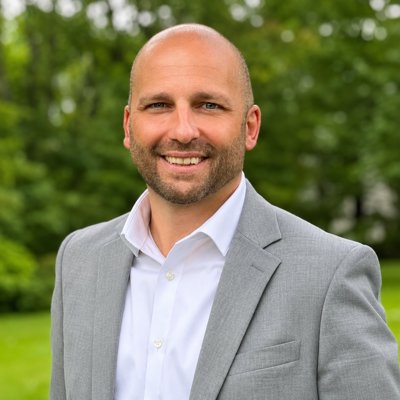
I pastor a French-speaking church in Quebec, Canada, where language has always presented a challenge.
The language barrier we've faced in our church
Over the years, we've welcomed visitors and families who didn't speak French. They could attend our services, enjoy the music, and experience the atmosphere of our gatherings, but understanding the sermon was another matter.
For a church, this is more than a communication inconvenience. When someone cannot understand the message being preached, an important part of their experience is missing.
We've always believed that the Gospel should be accessible to everyone, regardless of the language they speak. But believing that and finding a practical way to make it happen are two different things.
Traditional church translation has its challenges
For many churches, simultaneous interpretation has traditionally required volunteers, professional interpreters, specialized equipment, or some combination of these. Each option comes with its own challenges.
Volunteer interpreters may not always be available, especially when several languages are needed. Professional interpretation can become expensive, and dedicated interpretation equipment requires additional setup and management. For smaller and medium-sized congregations, these obstacles can make multilingual ministry difficult to sustain.
And the challenge doesn't end at the church doors. Today, many churches livestream their services. People from different countries and language backgrounds may be watching the same sermon online. How do we make sure they can understand it?
How AI is changing church translation
Artificial intelligence has introduced new possibilities for real-time translation. Instead of relying on one person to interpret everything, modern AI translation systems process spoken language through several specialized technologies. The process generally involves three stages:
1. Automatic Speech Recognition (ASR)
The first AI model listens to the speaker and converts spoken words into text.
2. Machine Translation (MT)
A second AI model translates that text into another language, taking linguistic context into account.
3. Text-to-Speech (TTS)
A third AI model converts the translated text into spoken audio, allowing listeners to hear the message in their preferred language.
These technologies work together, each performing a specialized function. Of course, AI translation isn't perfect. Accents, biblical terminology, cultural expressions, and complex theological concepts can still present challenges. That's why the quality of the underlying AI models matters so much.
For churches, accuracy isn't simply about translating individual words. It's about communicating the intended meaning as faithfully as possible.
Our experience with Translatia
We've been using a platform called Translatia at our church. For transparency, I'm also involved with the company, so I'm writing from both my experience as a pastor and my involvement with the technology.
What interested me initially was the possibility of offering simultaneous translation without requiring visitors to install an application or use specialized receiving equipment. With Translatia, attendees can scan a QR code using their smartphone and access translated audio and text. This makes the experience considerably simpler for visitors.
But as we've explored the technology, I've become increasingly interested in what it can offer beyond translation during a service.
More than live translation: tools for church media teams
Churches already invest considerable time and resources into recording, producing, and distributing their services. What if the same technology used for live translation could also make that content more accessible afterward? Here are several possibilities that I believe church media teams should be exploring.
1. Translated subtitles for OBS and livestreaming
Many churches use OBS Studio for livestreaming their services. Translatia offers subtitle integration that allows translated text to be incorporated into an OBS production. This creates opportunities to provide subtitles during live broadcasts and produce video content for audiences who speak other languages.
Rather than treating translation as a separate activity, churches can begin incorporating it into their existing production workflow.
2. Embedding live translation on a church website
Another useful feature is the ability to embed a translation player directly into a church website. For example, a church might already have a YouTube livestream embedded on its homepage. With an embedded translation player, viewers can watch the video and listen to the translated audio without leaving the website.
For churches that use Wix, WordPress, or other website platforms supporting iframe embeds, this can provide a practical way to create a more integrated multilingual experience.
3. Turning translated audio into podcasts
A sermon may originally be preached in French, but the message could potentially reach a much broader audience through translated audio. Instead of limiting that audio to the live service, churches can reuse it for podcasts or other audio publications. This extends the reach of existing sermons without recording entirely new messages in each language.
4. Using transcriptions for articles and publications
Transcription creates another opportunity. Spoken sermons can be converted into written material that can be reviewed, edited, and adapted for publication: blog articles, study notes, sermon summaries, and other resources. The same sermon delivered to one congregation can become a source of content for people who were never present.
As with any AI-generated material, reviewing the final text for accuracy is important, particularly when quoting Scripture or discussing theological subjects.
Technology should serve the message
One thing I've learned over the years is that technology is most valuable when it helps the church accomplish its mission. The goal isn't to replace human relationships, pastoral care, or the importance of communicating clearly. Nor should we assume that artificial intelligence can replace the judgment and sensitivity of a skilled human interpreter in every situation.
But technology can help remove obstacles that previously made multilingual ministry difficult or expensive. For a French-speaking church like ours, this is particularly meaningful. We want visitors to feel welcome, but we also want them to understand what's being said. And when our services reach people online, we want language to be less of a barrier.
The future of multilingual churches
Churches today have opportunities that would have been difficult to imagine just a few years ago. A sermon preached in one language can be heard in another language almost immediately. That same message can later become an audio recording, a subtitled video, or a written publication.
For church leaders and production teams, the question is no longer simply whether translation is possible. It's how we can integrate these tools responsibly, affordably, and effectively into our existing ministries.
Our experience with Translatia has encouraged me to continue exploring those possibilities. And I believe we're only beginning to discover how AI translation can help churches communicate across language barriers.
The message doesn't change. But our ability to share it across languages is changing.